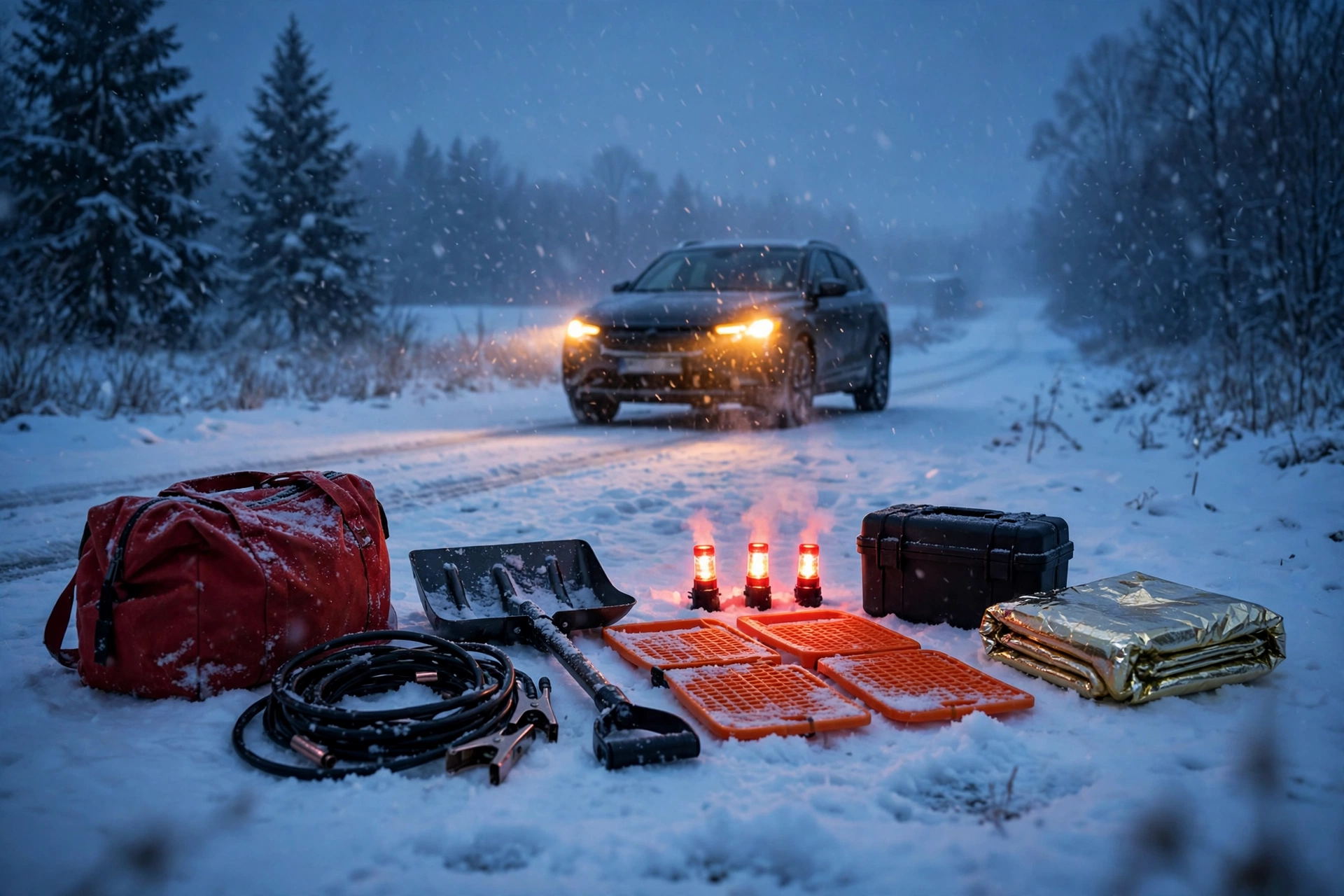
Picture this: it is late January, 11 PM, and you are driving home on a two-lane county road — the kind with no streetlights and no cell signal for the next nine miles. The temperature is 14°F and falling. Your car slides on a patch of black ice, corrects, and then dies halfway into the shoulder with the battery too weak to turn the starter. The nearest town is twenty minutes away. The tow truck is an hour out, if you can even get a signal.
Now picture the same night with a proper winter kit in the trunk. You pull out a portable jump starter, clamp it on, and the engine turns over in thirty seconds. Or the wheels are just spinning on packed snow — you wedge two traction mats under the drive tires and drive out on the second try. Or nothing works and you are waiting an hour for the tow: you wrap up in thermal blankets, set out LED flares so the plow sees you, and stay warm and visible until help arrives. Same breakdown, completely different night.
That is what this guide is about. Winter does not forgive an empty trunk, and October is exactly when you should be building your kit — before the first freeze, before the shelves empty, and while prices are still normal. Below you will find the one complete kit worth buying, plus the seven individual essentials that matter most, each with real specs, real prices, and honest pros and cons. I will also walk you through how to choose between a pre-made kit and building your own, what to do if you actually get stranded, and what a fully outfitted trunk really costs.
Quick Picks — In a Hurry?
- Best complete kit: Lifeline AAA Premium Road Kit (42-piece) — jumper cables, flashlight, and first aid in one organized bag; the fastest way to a stocked trunk
- Best jump starter: NOCO Boost Plus GB40 — 1000A, starts gas engines to 6.0L, the benchmark every other jump pack is measured against
- Best traction mats: WawaAuto Foldable Traction Pads (2-pack) — 3.5-ton rated, folds to half an inch thick, unbeatable for the price
- Best folding shovel: BIRDROCK HOME 34" Folding Snow Shovel — full-length leverage that still fits the trunk
- Best thermal blankets: Don't Die In The Woods 4-pack — extra-thick tear-resistant mylar, a glove-box essential
- Best tire inflator: AstroAI S1 (150 PSI) — digital preset with auto shutoff, no more guessing at midnight
Why October Is the Month to Build Your Kit
Every year the same thing happens: the first real snowstorm hits, and within 48 hours the local auto-parts shelves are stripped of ice scrapers, the jump starters are sold out online, and prices on the remaining stock creep up. Winter-prep buying is urgency buying — and urgency buying is how you end up paying too much for the wrong thing. Building your kit in October means you shop calmly, compare properly, and pay normal prices.
The stakes are not theoretical. Federal data counted 320 fatal crashes and an estimated 22,293 injury crashes in snow or sleet in a single recent year, and cold quietly attacks the car itself: battery power drops as temperature falls while the engine needs more of it to start, and tire pressure falls roughly 1 PSI for every 10°F drop. A car that was perfectly fine in October can be a no-start brick in January. The kit in your trunk is the bridge between "stranded" and "delayed."
There is also a strong rural angle most guides ignore. If you commute on county roads, farm-to-market routes, or mountain passes, you cannot count on a tow truck in twenty minutes or a gas station around the corner. Out there, self-rescue is not a hobby — it is the plan. A jump starter, traction mats, and a shovel are the difference between driving home and spending the night in a cold car waiting for a plow.
Complete Kit vs. Build-Your-Own: Which Should You Buy?
This is the first decision, and the honest answer is that most cold-climate drivers should do a little of both. Here is how the two approaches compare.
Buy a pre-made kit if you want the fastest path to a stocked trunk. A good one — like the Lifeline AAA 42-piece below — puts jumper cables, a flashlight, a first-aid kit, and basic tools in one organized bag for around $40 to $50, which is far cheaper than buying those components separately. The catch: no pre-made kit at this price is truly winter-complete. You will not find a proper jump starter, traction mats, a real shovel, or serious thermal protection inside. Think of it as the foundation, not the finished house.
Build your own if you want best-in-class everything and do not mind spending more. Hand-picking the jump starter, mats, shovel, blankets, inflator, flares, and first-aid kit gets you better gear in every category — at roughly $250 to $300 all-in. The middle path, which is what I recommend for most people: buy the pre-made base kit for the basics, then add the winter-specific essentials individually. You get 90% of the performance of a full custom build for a sensible total.
One more consideration: a pre-made kit also makes an excellent gift. If someone you love drives an older car through winter, a stocked emergency bag is one of the most genuinely useful things you can hand them in November.
How to Choose the Right Winter Car Gear (2026 Buying Guide)
You do not need to become a survivalist. You need to cover five jobs: start the car, unstick the car, stay warm, stay visible, and fix the small stuff. Every product below serves one of those jobs. Here is what to look for in each category.
1. Jump Starter: Buy More Power Than You Think You Need
Cold cranking is the hardest job a battery does all year, and a weak battery that starts fine at 50°F can give up entirely at 10°F. A lithium jump starter is the single highest-impact item you can put in a trunk — it replaces the need for a second car, a Good Samaritan, and twenty minutes of frozen fingers on jumper cables.
Look for peak amps matched to your engine: 1000A covers most 4-cylinder and V6 gas engines up to about 6.0L; big V8s and diesels need 2000A+. Check for spark-proof and reverse-polarity protection (so a mistake does not become a fireworks show), a built-in flashlight with strobe/SOS, and a USB power bank function — in a real emergency your phone is your lifeline, and cold drains phone batteries fast. Store it where it stays relatively warm and check its charge every few months; lithium does not love sitting at 0% in a freezing trunk.
2. Traction: Mats Beat Kitty Litter
The old advice — a bag of kitty litter or sand in the trunk — still works, but purpose-built traction mats work better and weigh less. What matters: load rating (3+ tons covers cars and light SUVs), grip pattern (deep honeycomb or cleats, not smooth plastic), and foldability — rigid recovery boards are fantastic off-road but eat half a trunk. Fold-flat mats you will actually keep in the car beat pro boards you leave in the garage. And note the direction: most mats have an engraved "this side up" — upside down, they are just expensive sleds.
3. Warmth: Assume You Will Wait
Plan for the tow truck taking an hour, not fifteen minutes. Thermal mylar blankets reflect up to 90% of body heat, weigh almost nothing, and cost a few dollars each — there is no excuse not to carry several. Extra-thick reusable mylar beats the flimsy single-use kind that shreds the first time you unfold it. Beyond blankets, stash a warm hat, gloves, and socks: you lose shocking amounts of heat from an uncovered head and wet feet, and these are the items stranded drivers always wish they had.
4. Visibility: Be Seen Before You Are Hit
A disabled car on a snowy roadside at night is genuinely dangerous — low visibility plus slippery roads is how secondary crashes happen. LED road flares are the modern answer: brighter than old-school flame flares, reusable, magnetic (stick them to the car body), and safe around fuel. Look for multiple flash modes including SOS, USB-C recharging, and genuine 360° visibility. Pair them with a reflective vest if you ever have to step out of the car.
5. Air and Small Repairs: The Tire Inflator
Cold drops tire pressure, and a slow leak that was a minor annoyance in September becomes a flat sidewall in January. A 12V portable inflator with digital preset and auto shutoff lets you air up a soft tire on the shoulder in minutes instead of mounting a spare in a blizzard. Preset the pressure, press start, and let it stop itself — no crouching with a gauge in the wind. Check that the power cord is long enough to reach all four tires (about 10 feet is the sweet spot).
6. The Shovel and the Kit Bag
A folding shovel earns its trunk space the first time your wheels are packed in and the mats have nothing to bite. Full extended length (30+ inches) gives real leverage; anything under 20 inches is a toy. For the pre-made kit itself, prioritize jumper cable gauge and length (thicker and longer is better — 8-gauge/8-ft is the minimum), a real flashlight (not a keychain toy), and a first-aid kit with actual contents, not a zip bag with three bandages.
If You Get Stranded: The Rules That Keep You Alive
Gear helps only if you use it right. These are the guidelines from NHTSA, the National Weather Service, and the CDC — the unglamorous rules that save lives every winter.
- Stay with your vehicle. Your car is shelter, and it is far easier for rescuers to spot than a person on foot. Do not walk for help in a blizzard unless you can clearly see shelter very close by.
- Run the engine about 10 minutes per hour for heat — but FIRST clear snow from around the exhaust pipe, and crack a window on the downwind side. Carbon monoxide is odorless and kills quietly.
- Make yourself visible: turn on the dome light at night, hang a bright cloth on the antenna or door, raise the hood once the snow stops, and set out LED flares or triangles.
- Fight hypothermia actively: keep moving your arms and legs, huddle with passengers, wrap up in every blanket and piece of clothing you have, and sip water. Shivering, confusion, fumbling hands, and slurred speech are warning signs — below 95°F body temperature is a medical emergency.
- Conserve your phone: call for help, share your location, then dim the screen and limit use. A power bank in your kit is worth its weight in gold here.
- Keep the tank above half all winter. It prevents fuel-line freeze and buys you hours of engine heat if you are stranded.
One thing people get wrong: leaving the engine running continuously "to stay warm." Do not. Ten minutes per hour with the exhaust clear is the guideline — it stretches your fuel for many hours and keeps carbon monoxide risk low. And if you are stuck in snow rather than broken down, try the mats and shovel before you settle in to wait; a surprising number of "stranded" drivers could have driven out in five minutes with the right gear.
The 8 Best Winter Car Emergency Picks for 2026
Every pick below is a real product with verified specs and current pricing as of October 2026. Prices move — especially on Amazon — so treat the numbers as a snapshot and click through for today's price. What does not move is the ranking logic: each item earned its spot by being the most capable, most reliable choice for its job.
1. Lifeline AAA Premium Road Kit (42-Piece)
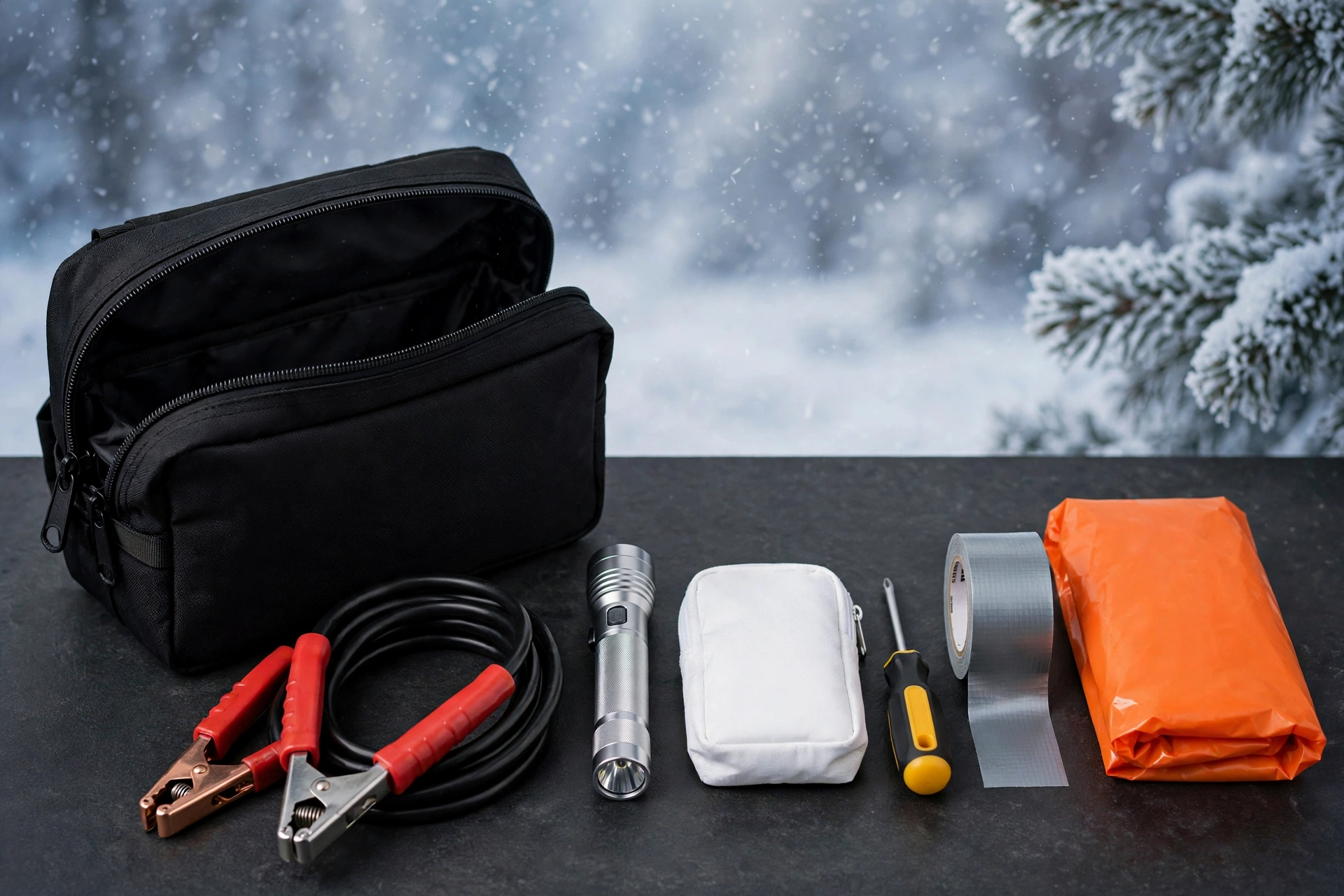
If you want one purchase that takes your trunk from "empty" to "covered" in a single box, this is it. The Lifeline AAA Premium Road Kit packs 42 pieces — 8-foot jumper cables, a 9-LED aluminum flashlight (batteries included), a 24-piece first-aid supply, a 2-in-1 screwdriver, duct tape, an emergency poncho, cable ties, and a shop cloth — into a compact 12x6x6-inch bag that fits anywhere. It is AAA-licensed, one of the best-selling roadside kits on Amazon with 8,400+ ratings, and it costs less than buying the components separately. For a new driver, a teenager's first car, or anyone starting from zero, this is the obvious first buy.
The honest limitation: it is a roadside kit, not a winter kit. There is no snow shovel, no thermal blanket, no hand warmers, no jump starter. Think of it as the foundation — pair it with the winter-specific picks below and you have a genuinely complete cold-weather setup. The 8-gauge, 8-foot cables are also on the thin/short side for big trucks and SUVs, so owners of large vehicles should note that.
- True all-in-one: cables, light, and first aid in one organized bag
- AAA-licensed brand with a huge, long-term owner base
- Far cheaper than buying components separately (~$40–50)
- Compact enough for any trunk or back seat
- Not winter-specific — no shovel, blanket, or warmers included
- Cables are thin/short for large trucks and SUVs
- No tow strap or air compressor
2. NOCO Boost Plus GB40 (1000A)
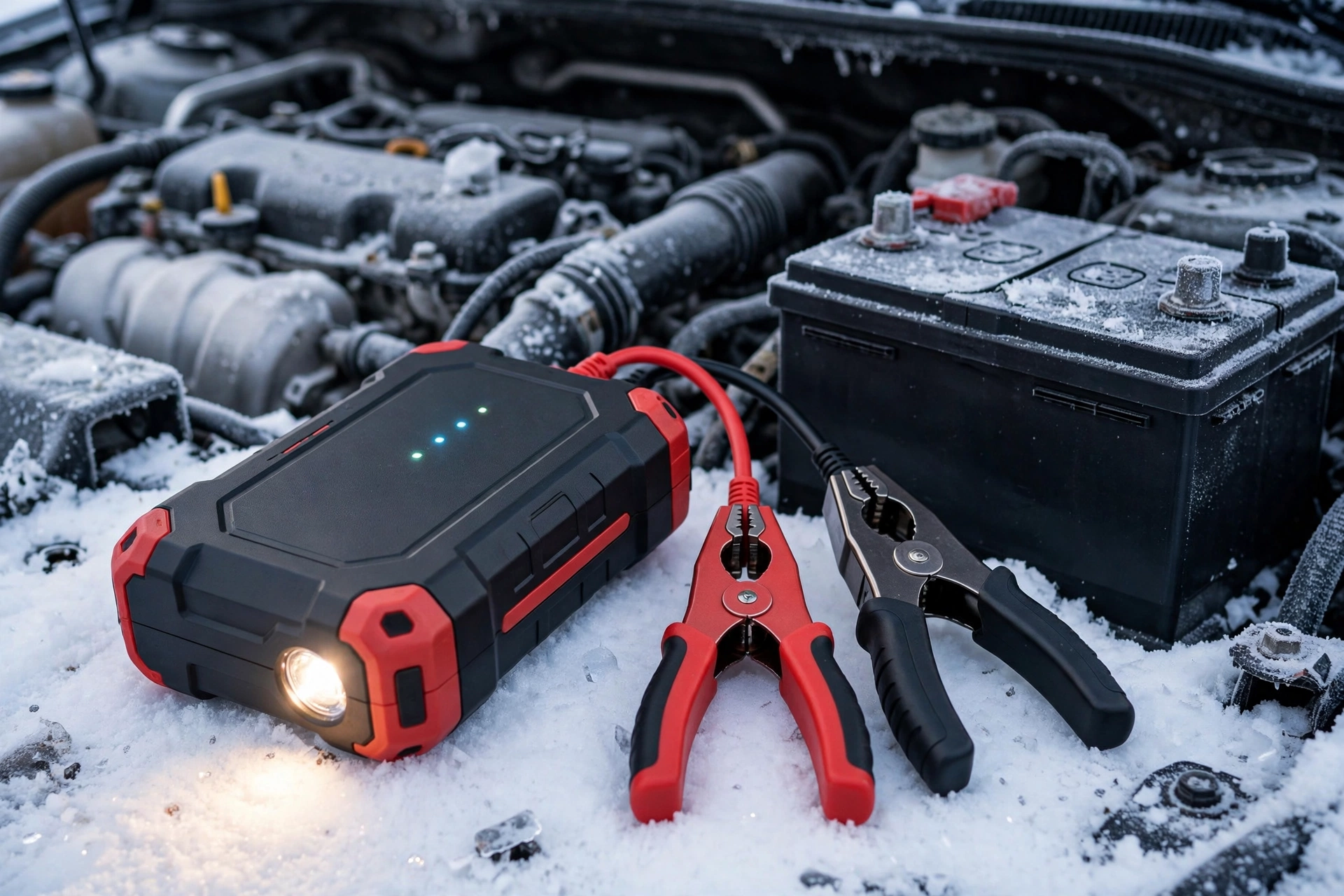
Ask a room of mechanics which jump starter to buy and most will say the same name: NOCO. The Boost Plus GB40 is the benchmark the entire category is measured against — 1000 peak amps, rated for gas engines up to 6.0L and diesels to 3.0L, up to 20 starts per charge, and still the #1 pick in October 2026 roundups after testing against a dozen rivals. It holds around 118,000 Amazon ratings at 4.5 stars, which is the kind of review base that cannot be faked.
What makes it the pick is not just power but forgiveness. The UltraSafe system is spark-proof with reverse-polarity protection, so connecting it wrong will not weld your mistake to the battery terminals — a real concern when you are doing this with numb fingers in the dark. It doubles as a USB power bank for your phone and a 100-lumen LED work light with SOS and strobe modes. At around $90–100 (list $124.95, frequently on sale), it is the single highest-value winter purchase on this list.
- Foolproof operation — spark-proof, reverse-polarity protected
- Huge long-term review base; still #1 in 2026 tests
- Doubles as phone power bank and SOS work light
- IP65 dust/water resistance for trunk life
- Not enough for big trucks or large diesels — size up to the GB70 (2000A)
- Pricier than generic packs; only a 1-year warranty
3. WawaAuto Foldable Tire Traction Pads (2-Pack)
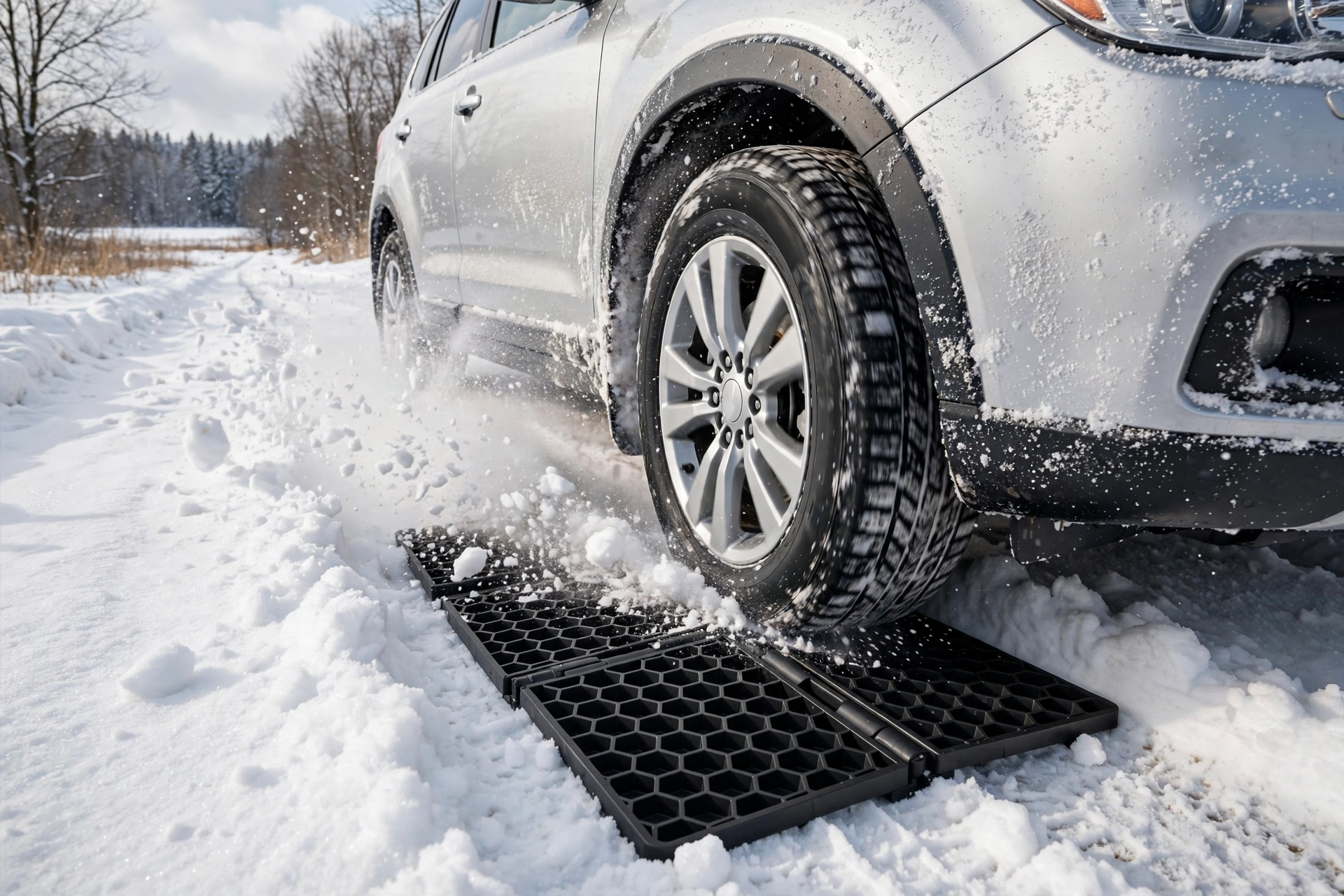
The most common winter stuck is also the most solvable: wheels spinning on packed snow or ice with nothing to bite. These WawaAuto pads are the elegant answer — 22-inch mats with a hexagonal honeycomb grip surface, rated to 3.5 tons (plenty for cars, SUVs, and light trucks), that fold down to half an inch thick. They live flat in the trunk and weigh about two pounds for the pair. Wedge them under the drive wheels, grip-side up, accelerate gently, and you are usually out on the first or second try. One reviewer even freed a full-size delivery truck with them.
They are plastic, not the heavy-duty composite of pro off-road recovery boards — so do not expect them to survive repeated high-torque abuse. And placement matters: they must sit grip-side up ("this side up" is engraved on them) and wedged firmly, or they can shoot out from under the tire. For light-to-moderate stucks — which is 95% of what winter drivers face — they are the best twenty dollars in this guide.
- Folds to 0.5" — genuinely trunk-friendly
- 3.5T rating covers cars, SUVs, and vans
- Works in snow, ice, mud, and sand
- Unbeatable value at around $20
- Plastic build — not as durable as pro recovery boards
- Can slide if not wedged carefully; placement is directional
4. BIRDROCK HOME 34" Folding Emergency Snow Shovel
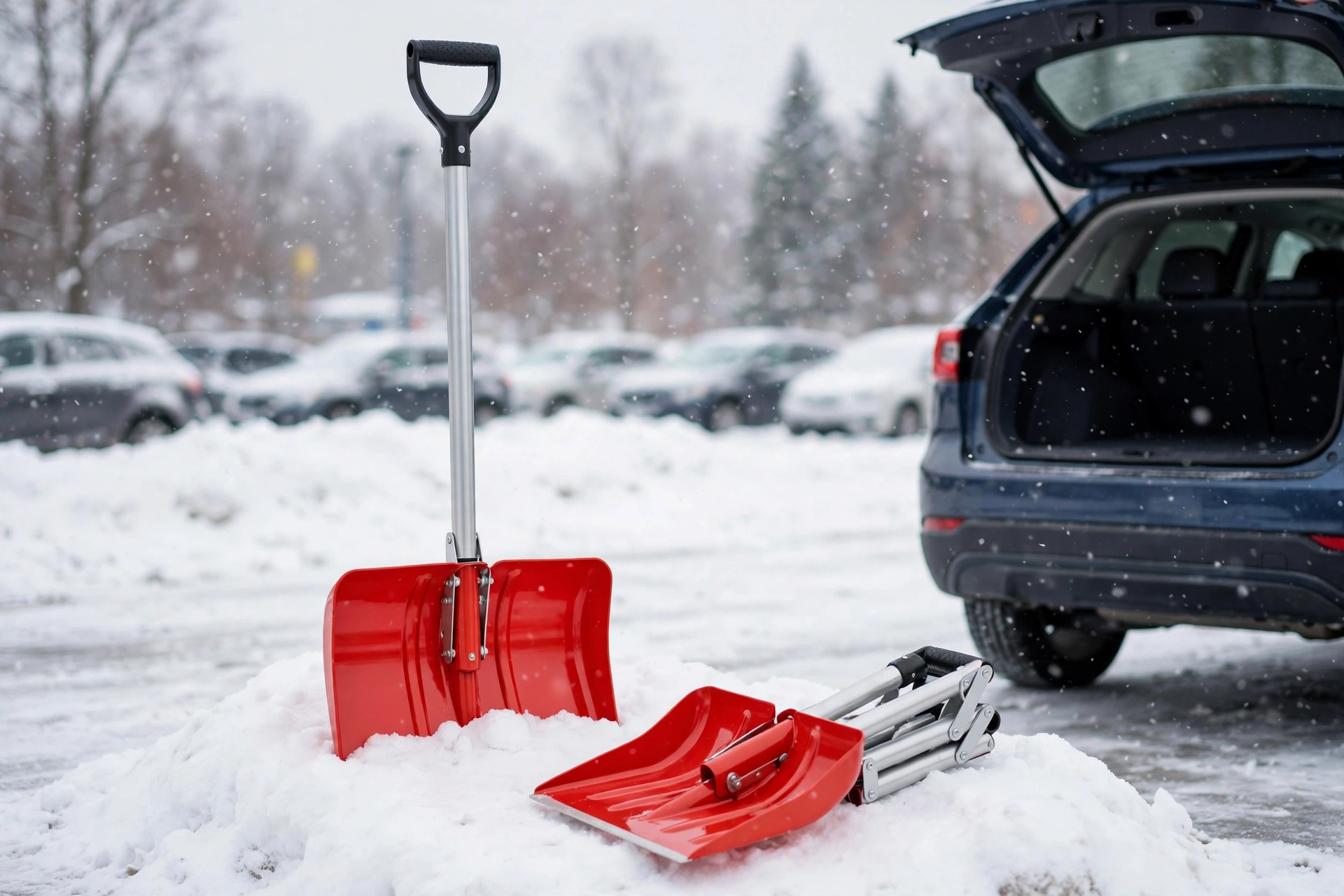
Mini trunk shovels are nearly useless — at 13 to 18 inches you are basically digging with a trowel while kneeling in a snowbank. The BIRDROCK HOME extends to a full 34 inches, which gives you real standing leverage to clear packed snow from around tires and under the chassis, then folds down flat for the trunk. At two pounds with an aluminum shaft, it is light enough to actually use without exhausting yourself, and the bright red color means you can find it in a dark trunk or a snowbank.
The blade is ABS plastic rather than metal, which keeps the weight down but means it is a snow shovel, not an ice breaker — do not attack frozen solid ground with it. It also costs more than the basic $20 collapsible shovels (around $40). But consistently ranking among the top compact car shovels in 2026 roundups tells you what owners think: this is the one that actually gets used instead of rattling around the trunk for three winters.
- Full 34" length — real digging leverage
- Only 2 lb; folds flat for trunk storage
- Bright red, easy to spot in snow or dark trunk
- Top-ranked in 2026 compact-shovel roundups
- Plastic blade — not for ice or frozen ground
- Pricier than basic collapsible alternatives
5. Don't Die In The Woods Emergency Blankets (4-Pack)
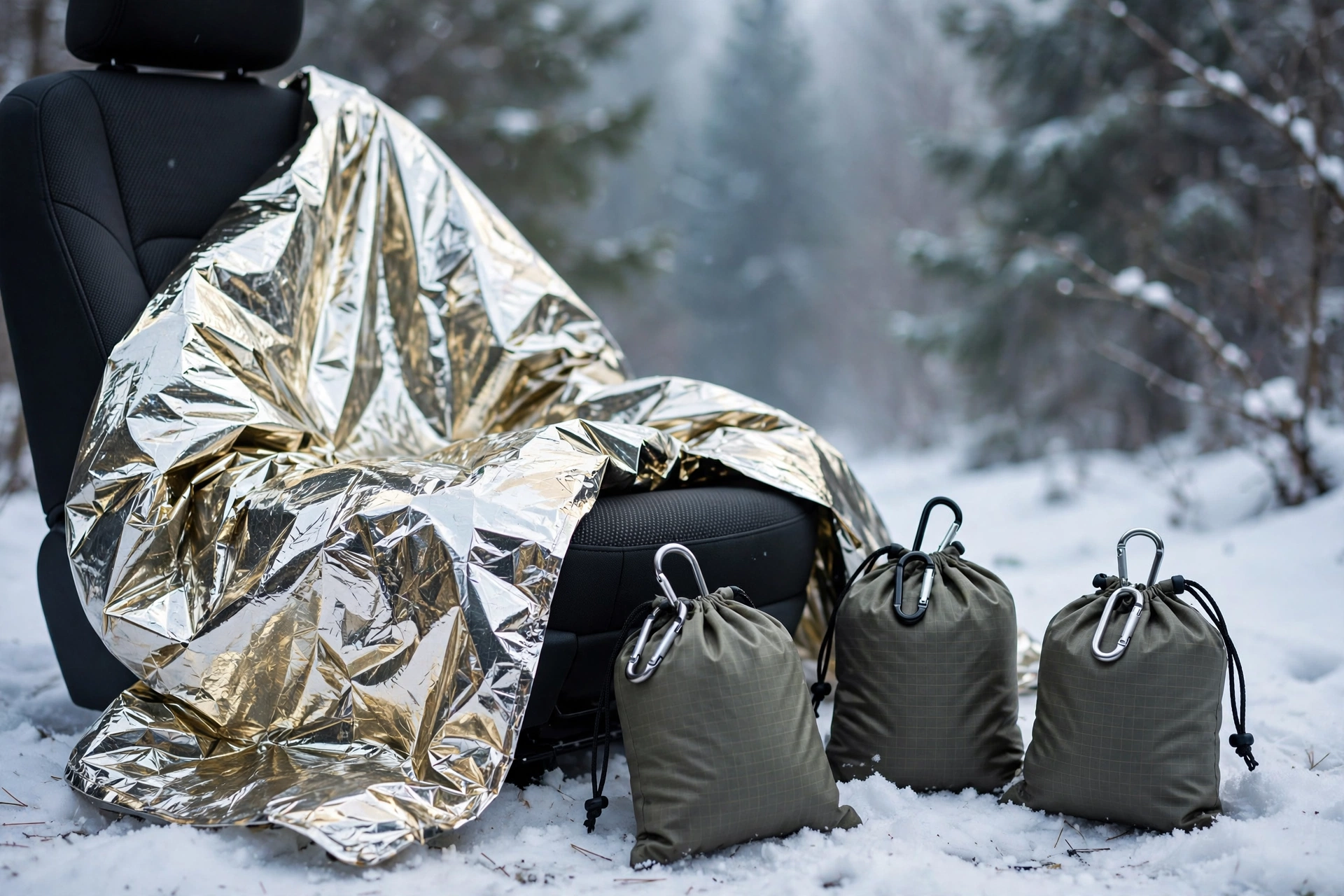
Cheap mylar space blankets have a well-earned bad reputation: unfold them once and they shred into glittering confetti. This 4-pack is the fix — extra-thick 28-micron HeatFlex mylar that is genuinely tear-resistant and reusable, reflecting up to 90% of body heat. Each blanket is a full 7x4 feet, packs into its own ripstop stuff sack, and all four ride in a zipper pack with a carabiner. The whole set weighs 12 ounces. Stash one in the glove box, one in the trunk kit, one in your partner's car — at around $25 for four, there is no reason any vehicle you care about lacks one.
Reviewers consistently call these the toughest mylar blankets they have found, and the pack has moved 100+ units a week with thousands of ratings. The trade-offs are inherent to the category: mylar is crinkly and not something you would choose for comfort, and you pay a premium over flimsy 6-packs. But in the scenario this guide is built for — waiting an hour for a tow at 10°F — "tough and warm" beats "comfortable" every time. With tape and paracord they even convert into an emergency bivy or wind shelter.
- Extra-thick tear-resistant mylar — reusable, not single-use
- 12 oz for four blankets — stash them in every vehicle
- Reflects 90% of body heat; waterproof and windproof
- Strong reviewer consensus on durability
- Crinkly and noisy — not comfortable for long use
- Premium price vs. basic bulk mylar packs
6. AstroAI S1 Portable Tire Inflator (150 PSI)
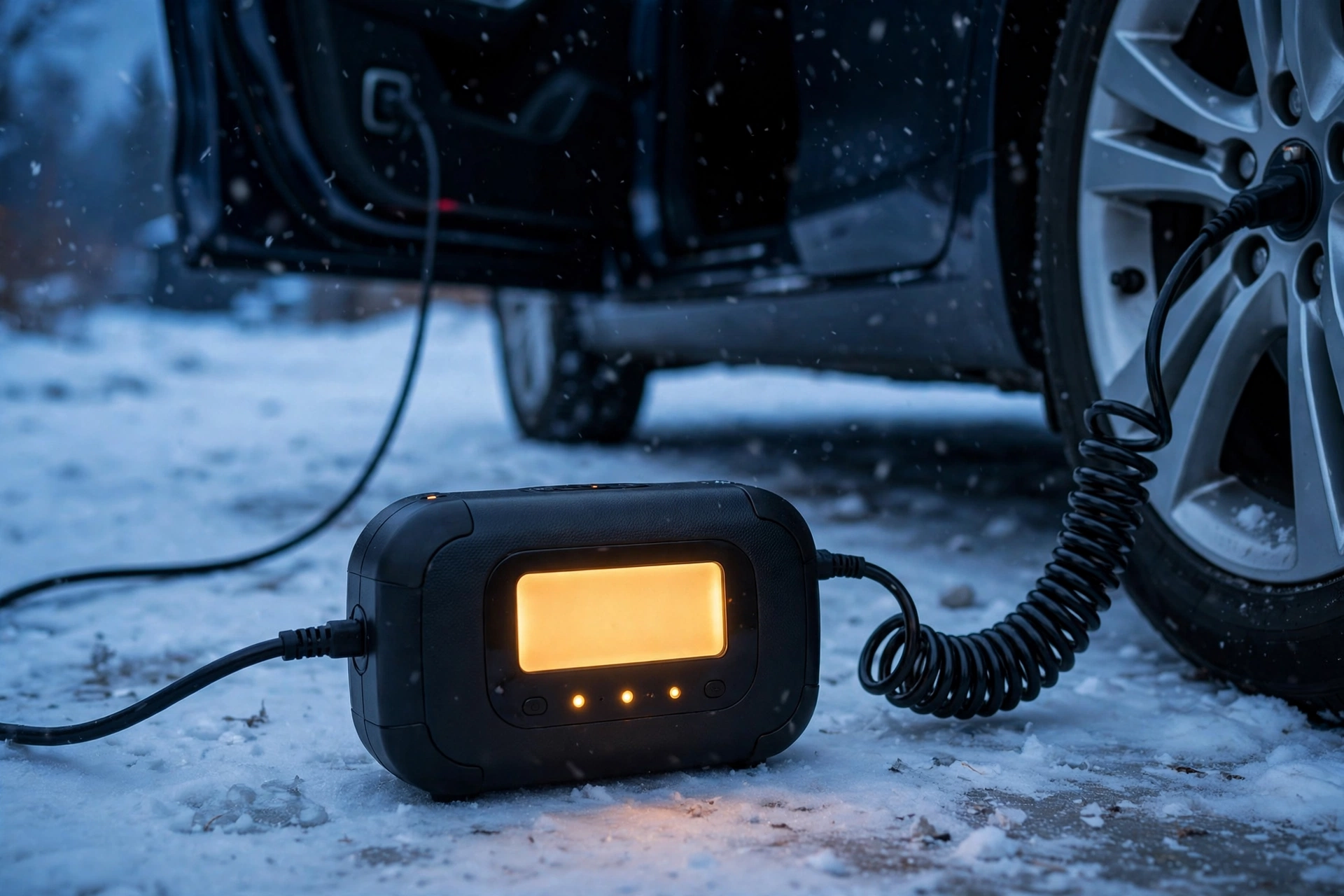
Cold weather drops tire pressure relentlessly, and a soft tire on a freezing shoulder is how a slow leak becomes a ruined sidewall. The AstroAI S1 is the inflator to keep in the trunk: 150 PSI max, a digital display where you preset your target pressure, and auto shutoff that stops itself — no crouching in the wind with a gauge, no overinflation. It takes a typical car tire from 30 to 36 PSI in under a minute, the 9.87-foot cord reaches all four tires from one 12V socket, and the built-in LED light matters more than you would think at midnight on an unlit road. With 800+ bought in a single recent month, it is clearly the crowd favorite.
Two honest caveats. It is corded 12V only — the car needs to be running (or you need a separate battery pack), so it cannot help if the electrical system is fully dead. And thermal protection limits continuous use to about 15 minutes, which is plenty for topping off tires but not for inflating high-volume items. For its actual job — rescuing soft tires in winter — it is the best value on the market at around $35–50.
- Digital preset + auto shutoff — set it and walk away
- Fast inflation; long cord reaches all four tires
- LED light and clear display for night roadside use
- Complete nozzle/accessory kit included
- Corded 12V only — car must be running
- 15-minute continuous-use thermal limit
7. Ecoangel USB-C Rechargeable LED Road Flares (6-Pack)
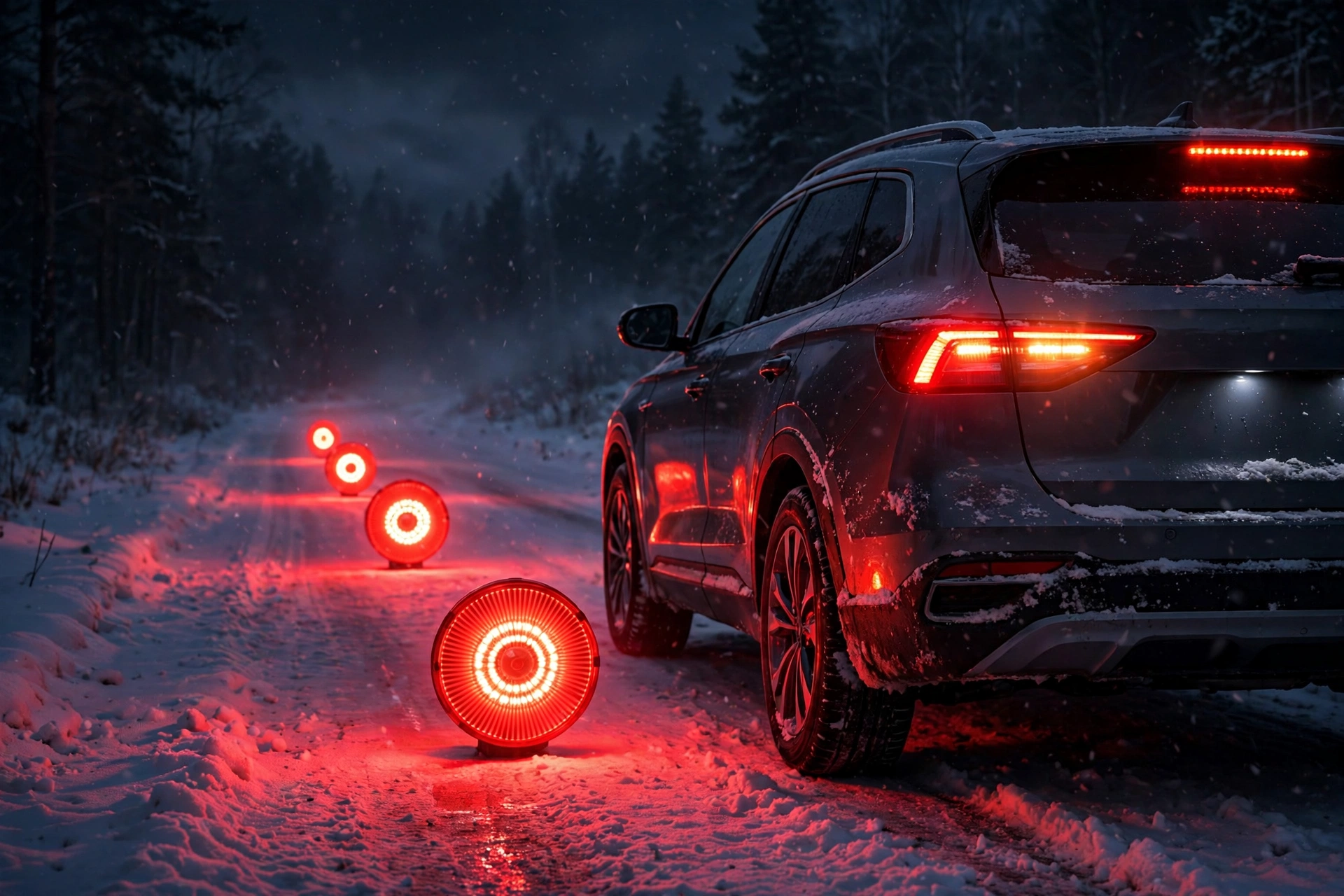
Traditional flame flares are a terrible fit for winter: they burn out in 15–30 minutes, they are a fire risk around fuel, and good luck lighting one in a blizzard. These Ecoangel LED beacons are the modern replacement — six discs with 9 flash modes including SOS, a strong magnetic base that sticks to the car body, and a foldable hook for hanging. Reviewers consistently emphasize the brightness: visible up to a mile at night, which is what keeps a plow or a semi from finding you the hard way. They are USB-C rechargeable from the car's own port — no disposable batteries slowly corroding in the trunk — and they rank #10 in Amazon's Emergency Strobe Lights category.
The rechargeable design is also the main maintenance note: top them up every 3 to 6 months, because a dead beacon is just a paperweight. (Some drivers prefer AA-battery beacons that can sit untouched for years — a fair alternative if you know you will never remember to recharge.) They are water-resistant and shockproof, but not submersible. Set two or three in a triangle behind the car and you have a visibility perimeter that flame flares could never match.
- Extremely bright — visible up to a mile at night
- USB-C rechargeable — no disposable batteries to corrode
- Magnetic base + hook mount almost anywhere
- Far safer than open-flame flares around fuel
- Needs recharging every 3–6 months
- Water-resistant, not submersible
8. Protect Life 100-Piece First Aid Kit
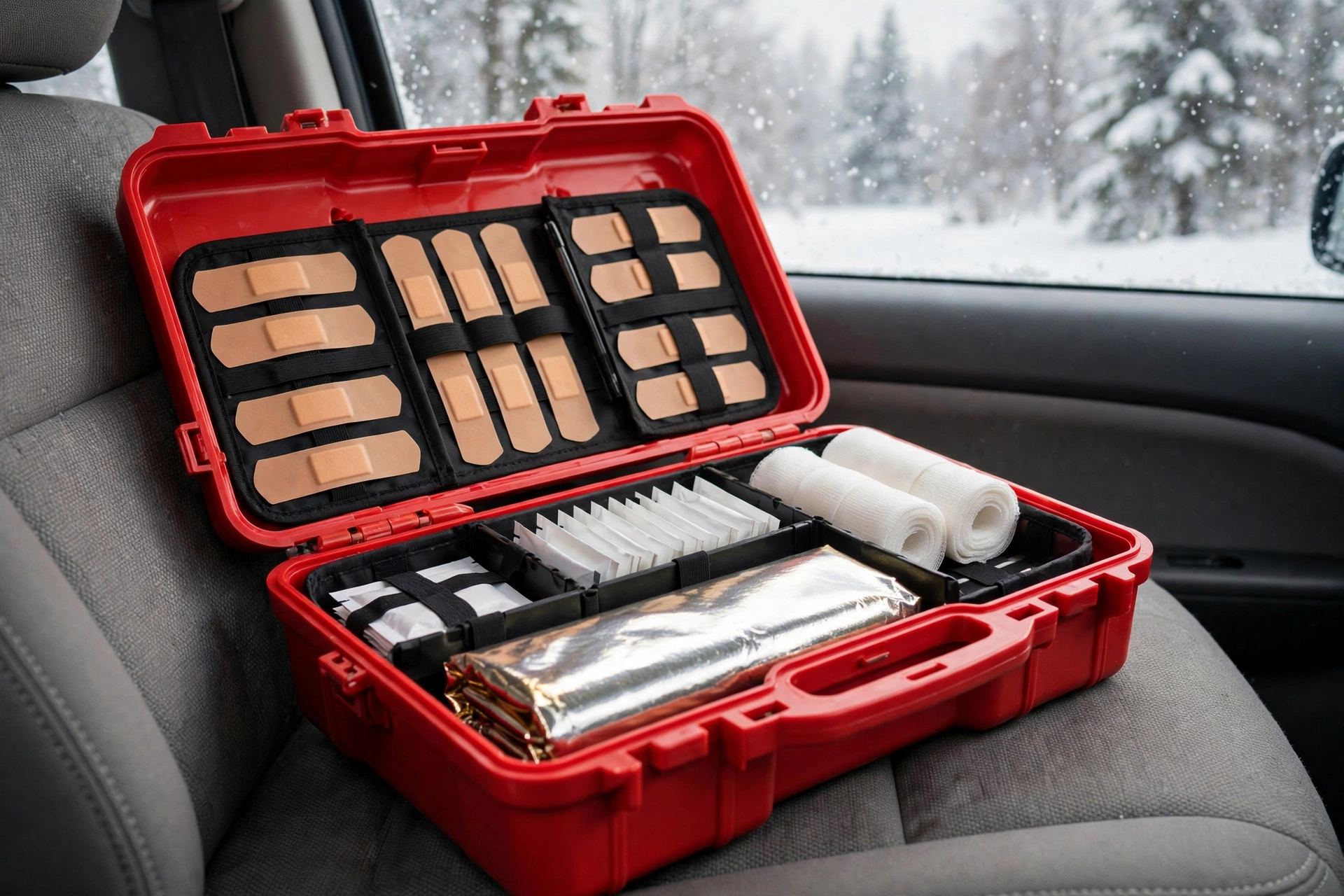
Every winter kit needs a first-aid kit, and this is the one to get: 100 pieces in a compact hard-shell case designed for cars — bandages, gauze, antiseptics, saline — plus, cleverly, an emergency blanket tucked inside, so it doubles as winter warmth backup. It is an Amazon Best Seller with 3,000+ bought in a single recent month and thousands of five-star reviews, and deal prices regularly drop it under $10 (typically $9–13 with coupons; list runs higher). At that price there is no reason any car lacks one.
Keep expectations honest: this is a basics kit, not a trauma kit. It handles cuts, scrapes, and minor roadside injuries — the things that actually happen — not serious medical emergencies. And the lowest prices require clipping the on-page coupon, so the sticker price moves around. But as the "I should have a first-aid kit in the car" box to check, nothing beats it for value.
- Surprisingly comprehensive — even includes an emergency blanket
- Best-selling kit with thousands of five-star reviews
- Compact hard-shell case made for vehicles
- Often under $10 with coupon — unbeatable value
- Basics only — not a trauma-level kit
- Best prices require clipping coupons
What Does a Full Winter Car Kit Really Cost?
This is the question that stops most people, so let us answer it with real numbers. There are three sensible budgets, depending on where you are starting from.
The essentials-only build (~$70–95): traction mats (~$20), thermal blankets 4-pack (~$25), first-aid kit (~$10), plus a basic pre-made kit or jumper cables you may already own. This covers the two most common winter scenarios — stuck wheels and waiting in the cold — for less than a tank of gas.
The recommended build (~$200–250): add the NOCO GB40 jump starter (~$90–100), the BIRDROCK folding shovel (~$40), and the AstroAI tire inflator (~$35–50) to the essentials above, plus the Lifeline base kit (~$40–50) if you are starting from zero. This is the setup I would put in my own family's cars: self-rescue capability for dead batteries, stuck tires, and soft tires, plus warmth and visibility while you wait.
The fully outfitted trunk (~$250–300): everything above plus the Ecoangel LED flares. Every scenario covered — start it, unstick it, inflate it, stay warm, stay visible, treat minor injuries.
However you slice it, compare the total against the cost of a single winter tow ($75–150+), a single ruined tire from driving on it flat ($150+), or — worst case — a night you do not want to think about. The kit pays for itself the first time you use any single piece of it. And buy it in October: winter-prep urgency buying in December and January is when prices spike and the good stuff sells out.
Frequently Asked Questions
What should be in a winter car emergency kit?
At minimum: a portable jump starter or jumper cables, traction mats (or sand/kitty litter), a folding snow shovel, thermal emergency blankets, warm spare clothing, a portable tire inflator, LED road flares or reflective triangles, a flashlight, a first-aid kit, high-energy snacks, water, a phone charger or power bank, and an ice scraper. NHTSA adds one more: keep the gas tank at least half full all winter.
Is it better to buy a pre-made kit or build my own winter car kit?
A pre-made kit like the Lifeline AAA 42-piece is the fastest, cheapest way to cover the basics — jumper cables, flashlight, and first aid in one organized bag for around $40–50. But no pre-made kit is truly winter-complete, so most cold-climate drivers do both: buy the base kit, then add a jump starter, traction mats, a folding shovel, and thermal blankets individually. A full custom build runs roughly $250–300 and gets you best-in-class everything.
Will a lithium portable jump starter work in freezing cold?
Yes, with one caveat: lithium batteries lose some punch in extreme cold. Store the jump starter in the cabin or an insulated spot rather than loose in a freezing trunk, keep it charged (check every few months), and warm it inside your coat for a few minutes before use in subzero temperatures. Quality units like the NOCO GB40 are designed for cold-weather use.
Do tire traction mats actually work in snow?
Yes — for the common scenario of wheels spinning on packed snow or ice. Clear snow from around the tires, wedge the mats firmly under the drive wheels with the grip side up, and accelerate gently. They work best on light-to-moderate stucks; they cannot rescue a car high-centered on a snowbank or buried to the axles — that is when you need the shovel first, then the mats.
What should I do if I am stranded in my car in a snowstorm?
Stay with your vehicle — it is your shelter and makes you visible to rescuers. Run the engine about 10 minutes per hour for heat, but first clear snow from the exhaust pipe and crack a window to prevent carbon monoxide buildup. Turn on the dome light at night, hang a bright cloth where it can be seen, and set out LED flares. Keep moving, stay wrapped up, and conserve your phone battery after calling for help.
How often should I check my winter car emergency kit?
Twice a year: once in October before the first freeze, and once mid-winter. Recharge the jump starter, check flashlight and flare batteries, replace expired food, water, and first-aid supplies, and confirm blankets and spare clothing are dry and intact. Cold degrades batteries and rubber faster than you expect, so the October check is the one that matters most.
How much does a complete winter car emergency kit cost?
A solid pre-made base kit is around $40–50. A capable essentials-only winter setup (traction mats, thermal blankets, first-aid) runs about $70–95. The recommended full build — adding a quality jump starter, folding shovel, and tire inflator — lands around $200–250, and a fully outfitted trunk with LED flares reaches roughly $250–300. Any of these beats the cost of a single winter tow.
The Bottom Line
Winter does not negotiate. Every year, drivers who were "going to get around to it" find themselves on a dark shoulder in January with a dead phone, cold hands, and an empty trunk — and every year, drivers with a $200 kit in the back drive home from the same situation like it was nothing. The difference is never luck. It is October preparation.
If you buy nothing else from this list, buy the NOCO Boost Plus GB40 — a dead battery is the single most common winter failure, and this solves it alone, in the dark, with no second car. Then add the WawaAuto traction mats and the Don't Die In The Woods blankets — twenty and twenty-five dollars that cover the next two most common scenarios. The Lifeline AAA kit is the fastest way to a respectable trunk if you are starting from zero, and the BIRDROCK shovel, AstroAI inflator, Ecoangel flares, and Protect Life first-aid kit complete the setup.
Build it this week, check it every October, and drive the winter like someone who has already thought it through — because you have.
Affiliate disclosure: Smart Bazaar 360 is reader-supported. When you buy through links on this page, we may earn an affiliate commission at no extra cost to you. It is how we keep the guides free. Our picks are chosen for quality first — commissions never decide the rankings. Product images in this guide are original illustrations created for Smart Bazaar 360, not manufacturer photos. Prices were accurate as of October 2026 and change frequently — click through for today's price.